A recent judgment by the Allahabad High Court in the case of Akash & Ors. v. State of UP & Ors. (Criminal Revision No. 1449 of 2024) has sparked widespread public debate and criticism on social media.
The core controversy revolves around the court’s observation that acts involving touching a minor girl’s private parts, pulling down her clothes, and forcibly dragging her to a secluded area do not legally constitute an attempt to rape.
Background of the Case
Two individuals allegedly targeted an 11-year-old girl, subjecting her to sexual abuse and attempting to drag her into a secluded spot. However, the intervention of passersby forced the accused to flee the scene, leaving the victim behind.
Based on the statements of the survivor and eyewitnesses, the trial court initially charged the accused with attempted rape under the relevant sections of the Indian Penal Code (IPC) and the POCSO Act. The accused subsequently approached the Allahabad High Court challenging these charges.

Observations by the High Court
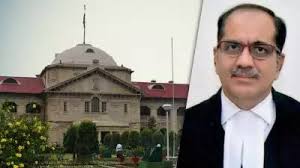
Justice Ram Manohar Narayan Mishra observed that:
- Lack of Direct Evidence of Intent: Even accepting the prosecution’s statements at face value, the court noted that the actions did not conclusively establish an intent to commit rape, as the accused did not make preparatory steps such as removing their own clothing.
- Absence of Complete Disrobement: The girl was not fully disrobed during the incident.
The bench emphasized that an “attempt” requires definitive steps moving beyond mere preparation toward the execution of the primary offense. Consequently, the court ordered that the accused be tried under lesser charges—such as Section 354B IPC (assault or criminal force with intent to disrobe) and Sections 9–10 of the POCSO Act for aggravated sexual assault—rather than under Section 376/511 IPC (attempted rape).
Technicality vs. Common Sense in Legal Frameworks
This ruling highlights the recurring gap between rigid legal definitions and public intuition. While the law mandates strict uniformity, precise evidentiary thresholds, and definitive elements of a crime to prevent arbitrary sentencing, the resulting reduction in charges often clashes sharply with common-sense perceptions of grave criminality.